Abracadabra+Get the app on the App StoreGet the app on Google Play
View Get
    Skip to content
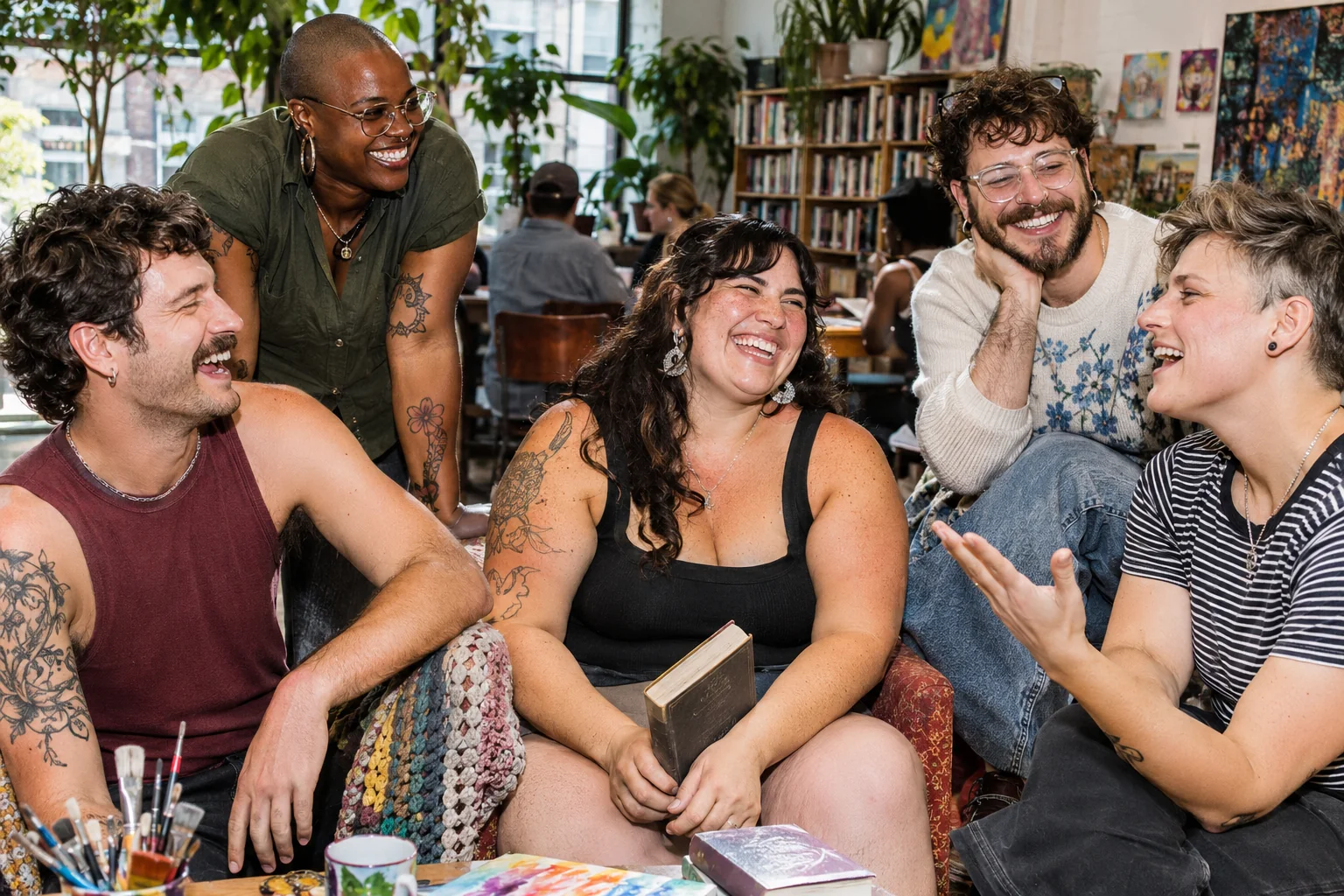
    Illustrative photo: five LGBTQ+ friends talk and laugh at a creative meetup in a neighborhood community center
    Glossary

    LGBTQ+ Glossary: Meanings of Queer, LGBTQIA+, Chosen Family & More

    Language matters. This glossary explains the most-searched terms in the LGBTQ+ community — what they mean, where they come from, and how they're used today.

    Updated August 2026 3 min read 6 chapters Curated by the Abracadabra+ team
    01

    What does LGBTQ+ stand for?

    LGBTQ+ stands for lesbian, gay, bisexual, transgender, queer (or questioning), and the '+' represents the many additional identities in the community, including intersex, asexual, pansexual, non-binary and two-spirit people. LGBTQIA+ expands this by explicitly including intersex and asexual identities.

    02

    What does queer mean?

    'Queer' was historically a slur but has been reclaimed by the LGBTQ+ community since the late 20th century as an umbrella term for anyone who isn't straight or cisgender. It's now widely used in academic, activist and everyday contexts — though some individuals still prefer other terms.

    03

    What is a chosen family?

    A chosen family is a group of non-biological kin — friends, mentors, partners — who provide the love, support and belonging a person may not receive from their family of origin. It's a foundational concept in LGBTQ+ culture, especially for people whose families rejected them after coming out.

    04

    What is a gayborhood?

    A gayborhood is a neighborhood historically associated with the LGBTQ+ community, where queer businesses, community centers and cultural life are concentrated. Famous examples include The Castro (San Francisco) and Boystown (Chicago).

    05

    What does coming out mean?

    Coming out is the process of telling others about your sexual orientation or gender identity. It's often a lifelong process, not a one-time event — LGBTQ+ people come out in new contexts (jobs, family, friend groups) throughout life.

    06

    What is Pride?

    Pride refers both to the annual celebrations of LGBTQ+ identity held worldwide (usually in June, commemorating the 1969 Stonewall Uprising) and to the broader concept of self-acceptance and visibility for queer people.

    Frequently Asked Questions

    What does LGBTQ stand for?

    LGBTQ stands for lesbian, gay, bisexual, transgender and queer (or questioning). It's the most widely used acronym for the community. Extended versions add I (intersex), A (asexual), and other letters — see LGBTQIA and LGBTQIA2S+ below.

    What does the Q stand for in LGBTQ?

    The Q stands for queer or questioning. 'Queer' is an umbrella term for anyone whose sexuality or gender falls outside straight and cisgender norms; 'questioning' describes people still exploring their identity. Both readings are considered correct depending on context.

    What does the B in LGBTQ stand for?

    The B stands for bisexual — attraction to more than one gender. Bisexual is distinct from pansexual (attraction regardless of gender) though many people use them interchangeably.

    What does LGBTQ+ stand for?

    LGBTQ+ stands for lesbian, gay, bisexual, transgender, queer/questioning, and the '+' represents additional identities including intersex, asexual, pansexual, non-binary, two-spirit and more. The '+' keeps the acronym inclusive without spelling out every letter.

    What does LGBTQIA stand for?

    LGBTQIA stands for lesbian, gay, bisexual, transgender, queer, intersex and asexual. It's an expanded version of LGBTQ that explicitly names intersex and asexual identities.

    What does LGBTQIA2S+ stand for?

    LGBTQIA2S+ adds 2S for two-spirit — a term used by some Indigenous North American cultures for people who embody both masculine and feminine qualities and hold distinct traditional roles. The + covers additional identities.

    What does the '+' in LGBTQ+ mean?

    The '+' represents identities beyond lesbian, gay, bisexual, transgender and queer — including intersex, asexual, pansexual, non-binary, two-spirit and other queer identities.

    Is 'queer' offensive?

    'Queer' has been widely reclaimed by the LGBTQ+ community and is commonly used as an inclusive umbrella term. Some individuals still find it hurtful based on personal history, so use it based on how the person you're speaking with identifies.
    How we build this guide

    Every Abracadabra+ guide is written and reviewed by our LGBTQ+ team, kept free of paid placements, and refreshed as venues, events and community resources change. We name places and organisations only when they are publicly listed as LGBTQ+ friendly, and we never publish numbers we cannot verify. Spotted something out of date? Tell us at contact@abracadabra.plus.

    Find your people, near or far

    Abracadabra+ helps you discover LGBTQ+ events, activities and community across 50+ US cities. Free to download.